
- 1. Itch is a symptom, not a disease
- 2. How much scratching is normal?
- 3. The causes, in the order vets check them
- 4. The itch–scratch cycle
- 5. How a vet works up chronic itch
- 6. Treating the itch itself
- 7. Food allergy or environmental allergy?
- 8. Home care, and what makes it worse
- 9. When scratching breaks the skin open
- 10. Clinical cases
- Frequently asked questions
- Related guides
1. Itch is a symptom, not a disease
Pruritus — the medical word for itch — is a sensation produced by the skin and the nervous system in response to something. In dogs, that something is one of a short list: a parasite, an allergen, an infection living in damaged skin, or a disease of the skin or the body as a whole. Chronic itch is almost never "just dry skin". Dogs do not commonly get the dry, flaky, winter itch that people get.
This is worth stating plainly, because owners spend a lot of money on moisturising shampoos and supplements for a dog that actually has flea allergy dermatitis or an environmental allergy. Naming the cause is not academic; it decides the treatment.
2. How much scratching is normal?
Every dog scratches a little. The useful measure is not "does it scratch" but "how often, at what times, and is it interfering with normal life":
- Probably normal: an occasional scratch, a brief episode after waking, no hair loss, no redness, sleeping through the night.
- Worth examining: scratching most days, licking or chewing the paws, red or darkened skin in the armpits and groin, recurrent ear problems, or a smell from the coat.
- See a vet soon: scratching or chewing several times an hour, scratching at night and waking you, hair loss, raw or weeping patches, scabs and crusts, or an obviously uncomfortable dog.
The distribution of the itching is one of the most useful clues a vet has, and it is worth writing down before the appointment: which parts of the body, whether both sides, and whether it is seasonal or year-round.
3. The causes, in the order vets check them
| Cause | Typical pattern | What it looks like |
|---|---|---|
| Flea allergy dermatitis | Intense itch, often seasonal but can be year-round in warm climates | Itch and hair loss over the lower back, tail base and hindquarters; flea dirt in the coat; you may never actually see a flea |
| Environmental allergy (atopy) | Usually starts between one and three years of age; often seasonal at first, then year-round | Itch on the face, ears, armpits, groin, and especially the paws; recurrent ear infections; licking and chewing of the feet |
| Food allergy | Non-seasonal, often from a young age, and does not respond to steroid treatment well | Itch on the face, ears, paws and rear; sometimes vomiting, diarrhoea or frequent bowel movements |
| Secondary bacterial or yeast infection | Develops on top of any of the above and makes the itch dramatically worse | Pustules, circular scaling, crusts, greasy musty-smelling thickened skin, darkened skin |
| Mites — Demodex, Sarcoptes, Cheyletiella | Variable; Sarcoptes causes an intense, unrelenting itch | Patchy hair loss and scaling, often on the face and feet; Cheyletiella looks like walking dandruff |
| Contact irritation | Only on the parts that touch the ground or the irritant | Red, itchy skin on the belly, feet or muzzle, improving when exposure stops |
| Hormonal or metabolic disease | Older dog, often with other signs | Thin or thickened skin, symmetrical hair loss, weight change, increased drinking, low energy |
| Behavioural or neurogenic | Diagnosed only after everything else is excluded | Licking of one spot, often a limb, sometimes a response to pain or stress |
One pattern is worth remembering: the itch frequently worsens in a spiral. Allergy damages the skin barrier, bacteria and yeast colonise it, and the infection itself becomes intensely itchy. A dog that was mildly itchy in spring can be unbearable by August, not because the allergy worsened, but because a secondary infection has set in.
4. The itch–scratch cycle
Scratching damages skin. Damaged skin itches more. That is the cycle, and it explains why the visible damage so often looks out of proportion to the original problem — and why breaking the cycle matters as much as treating the cause:
- The dog scratches or chews a spot, damaging the surface and releasing more inflammatory signals
- The skin becomes redder and more inflamed, which produces more itch
- The dog scratches more, and bacteria that live harmlessly on healthy skin multiply in the damaged surface
- The infection increases the itch again, and the lesion grows — sometimes within hours, as with a hot spot
Practical consequences: the collar, the anti-itch medication and the infection control all exist to break this loop. Without them, treating the underlying allergy alone is slow to show an effect, because the dog keeps re-opening the skin.
5. How a vet works up chronic itch
There is a defined order to this, and it is deliberately not "test everything at once":
- History and distribution. Age of onset, pattern through the year, diet, flea control actually used, other pets, response to previous treatment. This narrows the list more than any test.
- Rule out parasites and infection first. Skin scrapes and hair plucks for mites, tape impressions and cytology for bacteria and yeast. It is pointless to start an allergy investigation on skin that has an active infection — the infection has to be treated first so it stops confusing the picture.
- A strict diet trial where food allergy is possible: a single novel protein or a hydrolysed diet, fed exclusively, for a defined period. This is the only reliable way to diagnose food allergy, and it fails if the dog is fed anything else at all.
- Allergy testing for environmental allergy — intradermal skin testing or serum testing — but only after the previous steps, and used to choose immunotherapy rather than as a stand-alone diagnosis.
- Blood and urine testing where hormonal disease is possible, particularly in older dogs with recurrent skin infection.
- Reassessment over time. Chronic itch is often managed rather than cured, and the response to each step is itself diagnostic information.
6. Treating the itch itself
It is worth separating two questions that owners often merge: what stops the itch, and what stops it coming back. Both matter, and the first one makes the second possible.
- Anti-itch medication. Modern options include targeted drugs licensed specifically for allergic itch in dogs, and short courses of corticosteroids for severe flares. These are prescription medicines and the choice depends on the individual dog, other conditions, and how long treatment is likely to be needed. Used properly they are what makes life bearable while the underlying work-up happens.
- Treatment of secondary infection, bacterial and yeast, with appropriate topical and where necessary systemic therapy — and for the full course, not until it looks better.
- All-year flea control with a product that works in your region. This is the single highest-yield measure in an itchy dog.
- Barrier and skin support: appropriate medicated bathing and, in some dogs, essential fatty acid supplementation. These support the skin; they do not replace diagnosis and treatment.
- Allergen-specific immunotherapy where environmental allergy is confirmed — the only treatment that addresses the cause rather than the symptoms, and one that takes months to show benefit.
- Trigger management: avoidance where possible, managing humidity and coat, and treating the ears, which are skin.
What does not work: antihistamines are unreliable in dogs and are not a substitute for proper treatment; human steroid creams are licked off, can worsen infection, and are easily overdosed on a small dog; frequent bathing with harsh shampoos strips the barrier further; and repeatedly changing the diet without a proper trial produces no usable information.
7. Food allergy or environmental allergy?
| Food allergy | Environmental allergy (atopy) | |
|---|---|---|
| Age at onset | Often under one year, sometimes up to three | Usually one to three years; occasionally later |
| Seasonality | None — itching all year | Often seasonal at first, then year-round |
| Response to steroids | Often poor | Usually good |
| Other signs | Vomiting, diarrhoea, frequent bowel movements, ear disease | Paw licking, ear infections, face and armpit itch |
| Diagnosis | Strict diet trial, then challenge | History plus allergy testing, after infection is cleared |
A dog can have both. That is one reason a diet trial that is not strict produces a confusing result, and why the work-up is done in order.
8. Home care, and what makes it worse
Do:
- Keep a simple diary: when the itching started, which body areas, what season, what food and flea control are in use. This is genuinely useful to your vet.
- Use the medication exactly as prescribed, including the full course of any infection treatment.
- Use flea control all year, on every pet in the household.
- Use an Elizabethan collar when the dog is self-traumatising, especially at night.
- Keep the coat clean, dry and free of mats, and dry the skin after swimming or bathing.
- Feed the diet your vet has set, and nothing else — no treats, no table food, no flavoured medication — during a diet trial.
Do not:
- Apply human steroid or antibiotic creams, or human antihistamines, without veterinary advice.
- Bathe frequently with harsh or medicated human shampoos; over-washing damages the barrier.
- Use human painkillers of any kind — several are toxic to dogs.
- Assume a supplement will fix it. Supplements support skin; they do not diagnose or treat allergy.
- Stop treatment as soon as the dog stops scratching. The itch usually returns within weeks if the cause was never addressed.
9. When scratching breaks the skin open
At some point in a chronic case, the damage stops being redness and becomes an open wound. Self-trauma removes the surface, the skin underneath weeps, and the area can grow from a centimetre to ten in a day. This is a different problem with different priorities:
- Stop the self-trauma. A collar, adequate pain and itch control, and treatment of the infection driving the itch.
- Control the infection and get exudate off the surrounding skin before it macerates more of it.
- Cover the defect so the surface can heal and the surrounding skin can migrate across it, rather than drying, cracking, and re-opening.
- Reconstruct where a large area of skin has been lost and the defect cannot close by contraction alone — a skin graft or a skin substitute.
Materials used when scratching has destroyed the skin
Our ECM regenerative materials are veterinary surgical materials, used by the treating veterinarian after the wound has been cleaned and debrided. The antibacterial powder is applied to the debrided wound bed and dressed; where a substantial area of skin has been lost, artificial skin provides a barrier and a scaffold for the surrounding skin to regenerate into.
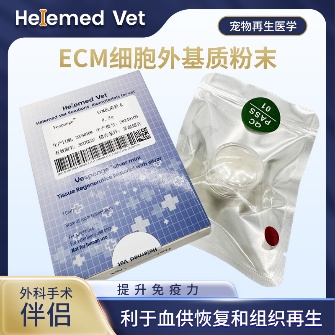
ECM Antibacterial Powder
ECM bioscaffold powder — an extracellular matrix (ECM) based antibacterial and inhibitory powder: widely used as ECM trauma dressings on infected internal/external wounds, fresh wounds, burns and crush injuries to markedly improve blood supply, accelerate healing, inhibit infection and reduce complications; it is also an ECM hemostatic material that stops capillary bleeding. How to use: after debridement, take a small amount of powder with forceps and apply to the wound surface, moisten with saline (moist wound healing) and bandage; apply once every 5 days — daily debridement is not required.

Biosynthetic Artificial Skin (6×8cm)
Artificial skin and ECM trauma dressing for external skin grafts: provides a barrier and induces regeneration, creating a good regenerative environment for subcutaneous tissue in burns and large-area skin loss.
Ask your veterinarian whether these materials suit your dog's wound; they are supplied to veterinary clinics and hospitals.
10. Clinical cases
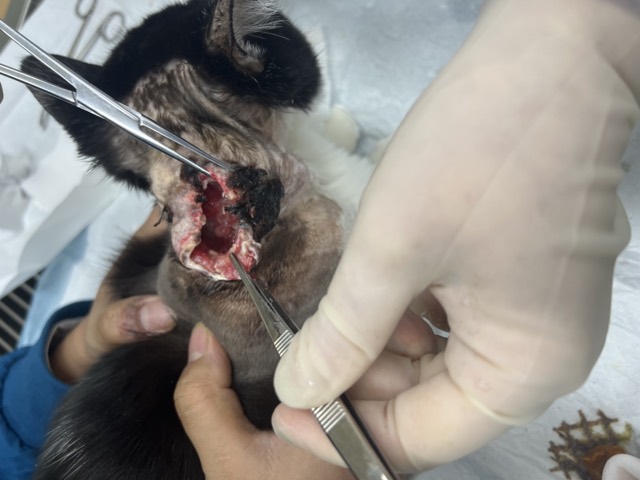
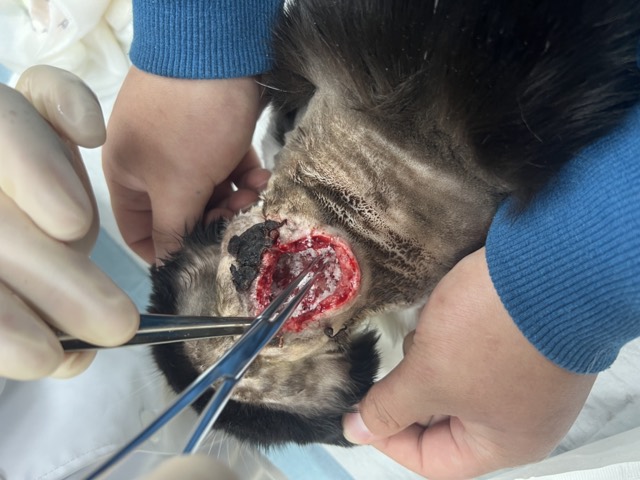
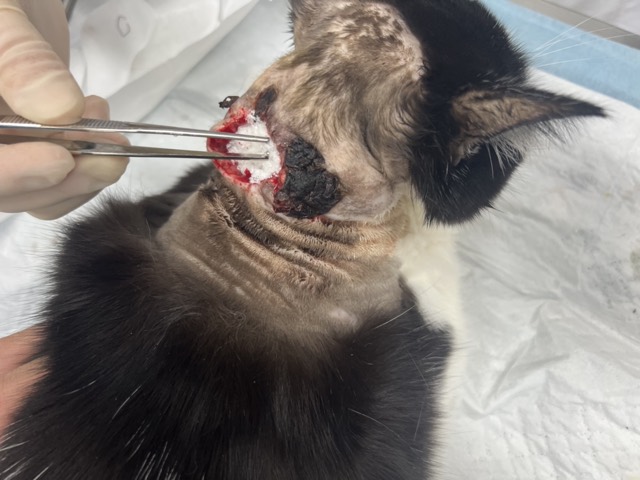
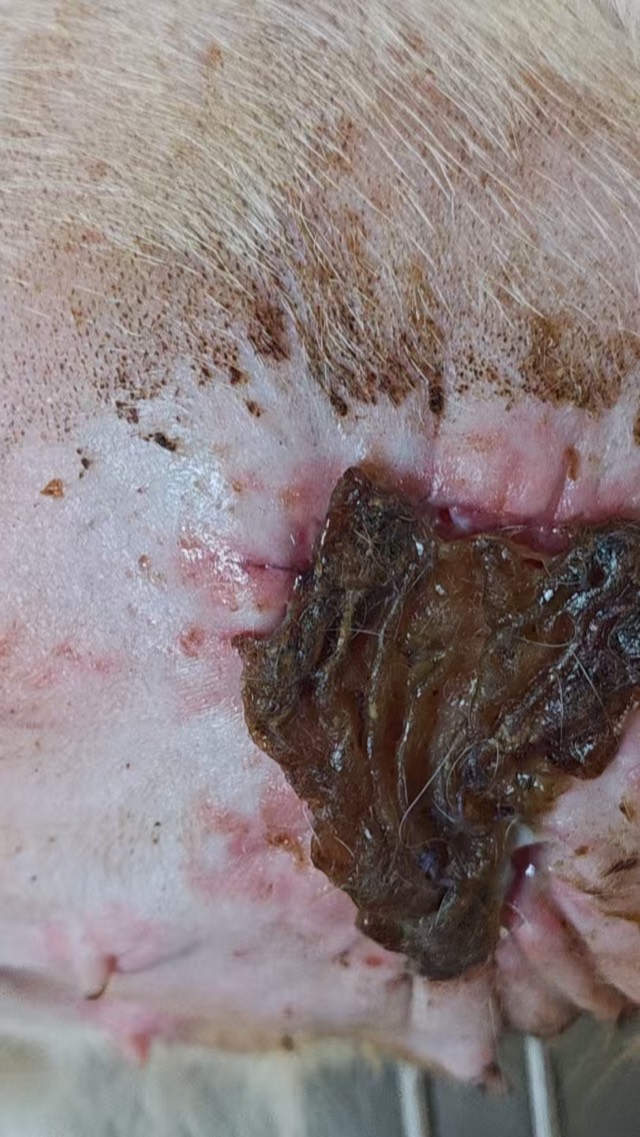
These cases from our partner hospitals show what is left when self-trauma and skin disease have gone past "an itch": a large area of ulcerated skin with muscle separation, and a skin defect repaired with artificial skin.
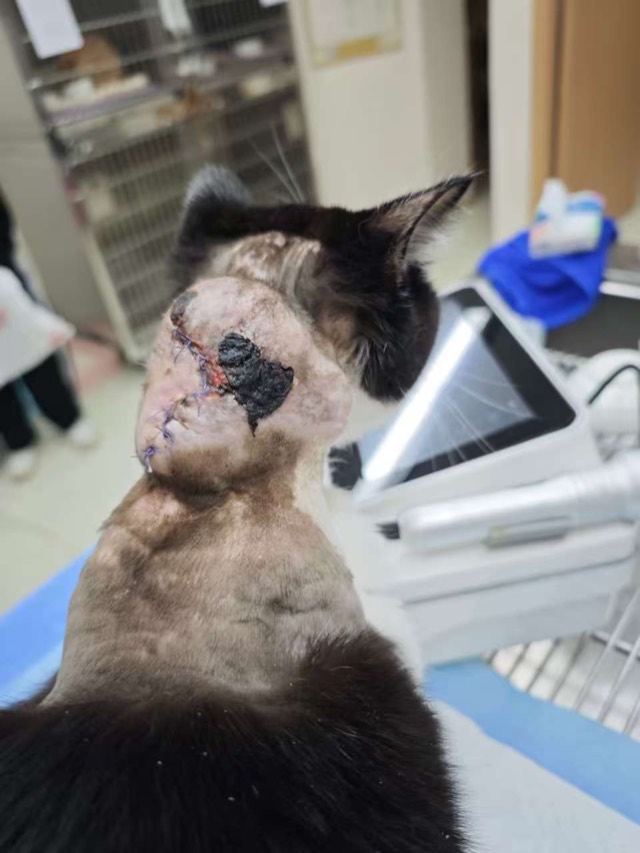
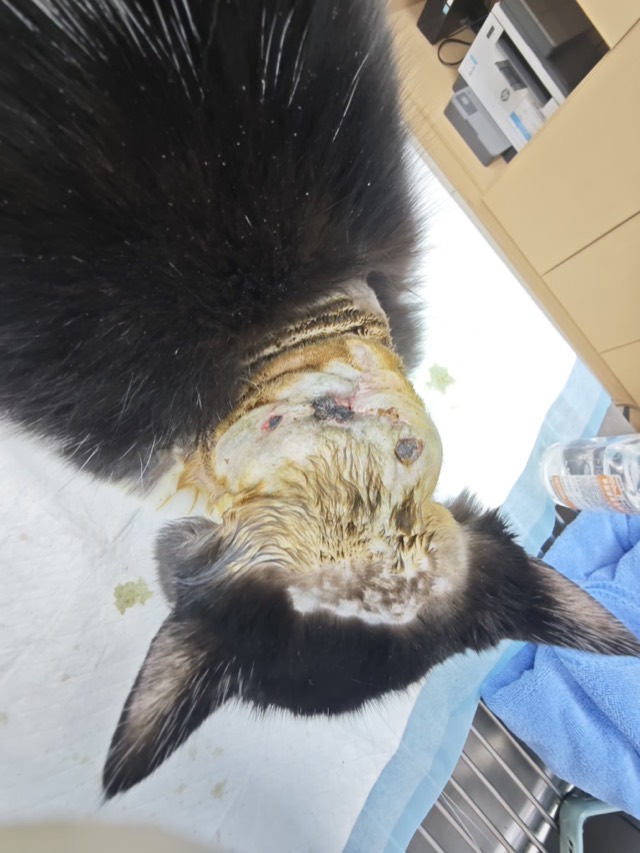
Large-Area Skin-Muscle Separation & Ulceration
A topical parasiticide burn caused large-area ulceration and heavy exudate on the neck, with skin-muscle separation and skin necrosis after the first surgery. On Feb 24 a second surgery packed two bottles of ECM Antibacterial Powder; a drain was placed the next day, the necrotic skin basically healed in 10 days, and the wound closed on Mar 4.
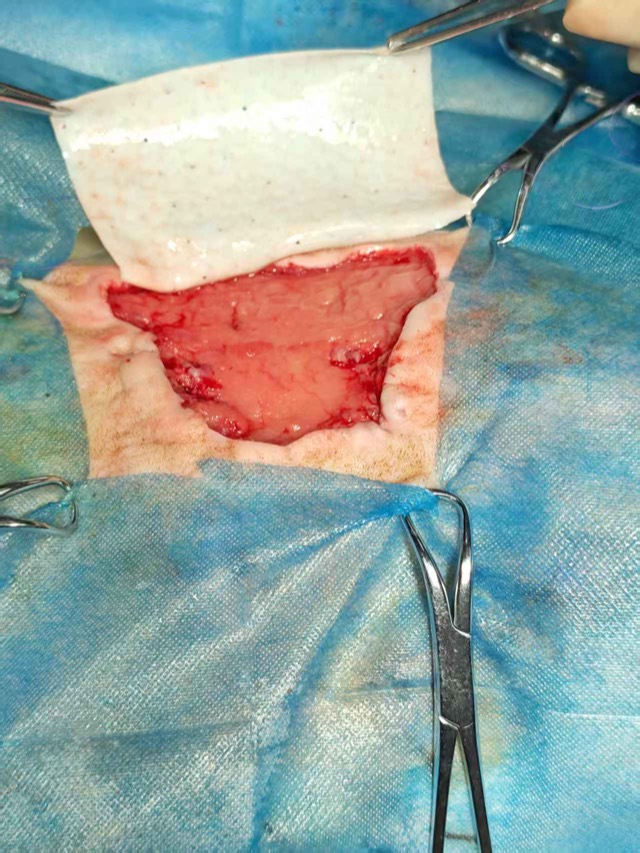
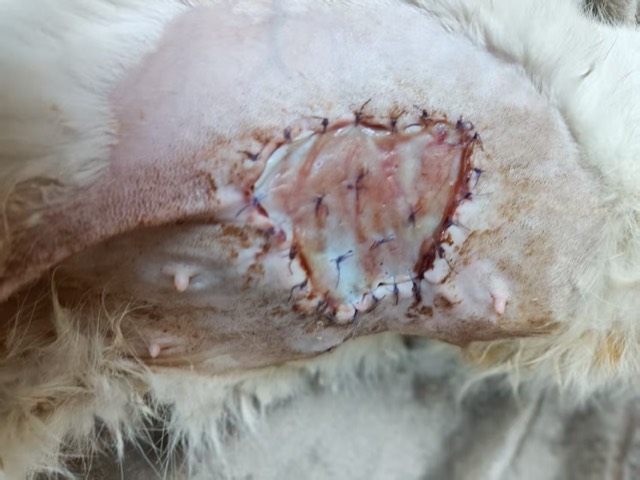

Artificial Skin for Skin-Defect Repair
A stray cat developed mammary ulceration and infection after giving birth; after Biosynthetic Artificial Skin grafting, only light daily cleaning and antibiotics were needed — simple care. The artificial skin sloughed off naturally on Oct 30 and the wound basically recovered by Nov 7.
Cases from partner veterinary hospitals. ECM materials are veterinary surgical materials and are applied by the treating veterinarian, not at home. See all 39 clinical cases →
Frequently asked questions
Why is my dog so itchy all of a sudden?
A sudden onset usually points to a specific trigger: a flea infestation, a new food or treat, a seasonal allergen, a contact irritant, or a fast-developing infection such as a hot spot. A sudden, severe itch in one area that appears within hours is typical of a hot spot or a foreign body.
What is the most common cause of itchy skin in dogs?
Overall, flea allergy dermatitis and environmental allergy (atopy) are the two most common. Secondary bacterial and yeast infections are the most common reason a mildly itchy dog becomes severely itchy, because the infection itself drives the itch.
Can I give my dog human antihistamines for itching?
Do not do this without asking your vet. Antihistamines are unreliable in dogs, the dose is not the same as for people, some preparations contain decongestants or sweeteners that are unsafe for dogs, and giving them can delay a proper diagnosis.
Does itchy skin in dogs go away on its own?
Mild, one-off itchiness after a specific exposure can settle. Chronic itch that has lasted more than a few weeks almost never resolves without treatment, and the longer it goes on the more likely a secondary infection has developed.
How do vets find out what my dog is allergic to?
In order: history and itch distribution, then tests to rule out mites and infection, then a strict diet trial if food allergy is possible, then allergy testing for environmental allergens. Testing for environmental allergy is only reliable once skin infection has been cleared.
Why does my dog scratch until it bleeds?
Because the itch has reached a level at which the dog cannot stop, usually from a combination of an allergen plus a secondary infection. A dog doing this needs veterinary treatment, not just a collar — the collar protects the skin while the itch is brought under control.
Will changing my dog’s food stop the itching?
Only if the problem is genuinely food allergy, and only if the trial is strict — a single diet, fed exclusively, for the full period, with no other food, treats or flavoured medications. Casual switching between foods does not diagnose anything and commonly makes the picture harder to read.