
- 1. How serious is the wound?
- 2. First aid in the first 10 minutes
- 3. How to clean a dog wound at home
- 4. Choosing a dog wound dressing and bandage
- 5. Dog wound infection: the signs
- 6. Why some dog wounds are not healing
- 7. How veterinarians treat a dog wound
- 8. Where ECM regenerative materials fit
- 9. Dog wound healing stages, day by day
- 10. Clinical cases
- When to call the vet right now
- Frequently asked questions
- Related guides
1. How serious is the dog wound? Start here
Before you touch anything, decide which of these four groups you are looking at. The group decides whether you are doing dog wound care at home, or driving to a clinic.
| Wound type | What it looks like | What to do |
|---|---|---|
| Superficial graze / abrasion | Skin scraped, oozing, no skin missing through the full thickness | Flush, cover, monitor at home. Usually heals in 5–10 days. |
| Full-thickness cut (laceration) | You can see fat, muscle or fascia under the skin; edges gape open | Cover with a clean dressing and go to the vet — most need sutures within 6–8 hours. |
| Puncture / bite wound | A small hole, often two holes; little bleeding; may look trivial | Always see a vet. Bite and puncture wounds carry the highest infection risk because the skin closes over the bacteria and creates a pocket. |
| Crush, degloving or burn | Skin torn away, charred or white leathery skin, tissue that is numb or cold | Emergency. Cover with a clean, damp, non-stick cloth, keep the dog warm and go now. |
The counter-intuitive rule: the smaller the hole, the higher the risk. A 3 cm tear in the skin is easy to assess. A 3 mm puncture from a bite can hide a deep pocket, a foreign body or a severed structure underneath.
2. Dog wound first aid: the first 10 minutes
This is the sequence veterinary emergency teams teach owners. It applies to almost every dog wound except burns, which are covered separately.
- Safety first. Any dog in pain can bite — including your own. Put a soft muzzle on if you have one, or loop a leash or soft cloth around the muzzle. If the dog is vomiting, struggling to breathe or collapsing, do not muzzle it.
- Stop the bleeding. Press a clean pad, gauze or towel firmly on the wound for 3–5 minutes without lifting it to look. Lifting to peek restarts the clot. A tourniquet is only for life-threatening bleeding from a limb and only as a last resort — note the time you applied it.
- Do not pour anything on the wound yet. No hydrogen peroxide, no alcohol, no iodine tincture, no human antiseptic cream. These are tissue-toxic, kill the cells that would repair the wound, and make the vet's assessment harder. Cool running water or sterile saline is all you need.
- Cover it. A clean non-stick dressing, a sanitary pad, or a clean tea towel, held in place with a bandage or a sock. Covering protects the wound on the way to the clinic and stops the dog licking it.
- Call your vet and describe three things: how the wound happened, how deep it looks, and whether the dog is bright and responsive. Those three answers usually decide whether you go now or first thing tomorrow.
Do not close a wound yourself. No superglue, no human wound-closure strips, no suturing. Closing a contaminated wound traps bacteria, and a wound that closes over an infection becomes an abscess — the exact situation we cover in Dog Abscess.
3. How to clean a dog wound at home
Once bleeding has stopped and a vet has told you the wound can be managed at home, cleaning is the part you own. Do it at least twice a day, and always wash your hands first.
- Clip or part the hair around the wound so nothing sticks into it. Blunt scissors, and point the tips away from the skin.
- Flush generously with sterile saline, or with lukewarm water from the tap if you have no saline. A 20 ml syringe lets you aim a gentle stream into pockets and crevices. Volume matters more than pressure.
- Gently wipe the wound surface with a clean gauze pad, moving from the centre outwards, and use a new pad for each wipe. Never scrub.
- If your vet has supplied a diluted antiseptic (0.05% chlorhexidine or povidone-iodine diluted about 1:10), use it as instructed. Do not mix products, and do not make the dilution stronger "to be safe" — stronger means more tissue damage.
- Pat dry with clean gauze, then re-dress. A wet wound surface is a bacterial surface, but a drying-out wound crusts and heals slower, which is why dressings that keep the surface slightly moist work best.
The four things that actually help at home: saline flushing, a clean moist dressing, an Elizabethan collar (a cone), and keeping the dog quiet. Everything else you read online is decoration.
For a wound that is healing normally you should see it look cleaner and flatter every day. For dog wound care at home, the single most useful habit is photographing the wound daily with a coin or ruler next to it. A week of photos shows a trend that a single look cannot.
4. Choosing a dog wound dressing and bandage
The dressing's job is to keep bacteria out, absorb fluid, keep the wound surface from crusting, and stop the dog from licking. Choose by how much the wound is oozing.
| Wound | Primary layer (touches the wound) | Secondary layer |
|---|---|---|
| Dry or nearly dry | Non-adherent paraffin or silicone pad | Soft padding + self-adherent bandage |
| Oozing | Foam dressing or calcium-alginate dressing | Absorbent pad + self-adherent bandage |
| Infected, discharging | Antimicrobial dressing, or (as a planned step) a wet-to-dry dressing changed by the vet | Absorbent pad, changed daily |
| Cavity or pocket under the skin | Dressing cannot reach it — the cavity has to be filled by the vet (see abscess) | Overlying absorbent bandage |
A dog wound bandage has three rules: it must not be so tight that it cuts off circulation (check the toes below it several times a day — they should be warm and the same size as the other foot), it must stay dry, and it must be changed at the interval your vet sets, typically every 1–3 days. If the bandage smells, slips, or gets wet, change it early.
Where the wound is on the body rather than the limb (flank, tail base, back), a full bandage is often impossible and the dog will lick instead. That is what an Elizabethan collar is for. Licking is not "cleaning" — dog saliva carries Pasteurella and other bacteria into the wound, and licking keeps the wound wet and macerated.
5. Dog wound infection: the signs, and the timeline
Every wound is contaminated, and some become infected. What matters is the direction of change: a fresh wound is expected to be red, slightly swollen and sore for the first 48–72 hours. Infection is what happens when those signs get worse after day three.
- Increasing swelling, heat, redness, or the wound edges pulling apart
- Yellow-green or dark discharge, or discharge with an unpleasant smell
- The wound turns dark, grey or black (necrotic tissue), or a new crater appears under the skin
- Pain when touched — a wound that was settling suddenly hurts again
- Fever, lethargy, not eating, vomiting, or a dog that is "just not right"
- No improvement after 10–14 days, or a wound that keeps re-opening
A dog wound infection is not something to treat at home with antibiotics from a cupboard. Human antibiotics are the wrong drug, the wrong dose, and the wrong duration for a dog, and some are toxic to dogs. The vet will usually take a sample for culture so the antibiotic actually matches the bacteria — a wound that has already been on the wrong antibiotic is much harder to fix.
If the skin around the wound is generally inflamed rather than just at the wound edge, or the dog keeps developing new patches of crusty, hairless, exuding skin, the problem may be skin disease rather than a single wound — see Dog Skin Infection and Dog Hot Spots.
6. Why some dog wounds are not healing
A dog wound not healing on schedule is nearly always one of nine causes. A veterinarian works down this list in order, which is why the examination matters more than any ointment.
- Infection under a closed surface — the most common. The skin seals, the bacteria multiply underneath, and the wound becomes a pocket.
- Dead space — a cavity left under the skin after tissue loss or after surgery. Fluid collects there, bacteria grow there, and fresh tissue cannot fill the gap because nothing is holding the space until it fills.
- A foreign body left inside — a grass awn, wood splinter, tooth fragment from a bite, or a piece of grit. The wound will not close over it.
- Necrotic tissue at the base — dead tissue is a bacterial culture medium and physically blocks healing. It has to be debrided.
- Movement and tension — wounds over joints, and wounds closed under tension, tear open again.
- Poor blood supply — degloving injuries, tight bandages, damaged vessels.
- Licking and self-trauma — the single most fixable cause, and the one owners most often underestimate.
- Underlying disease — low protein from poor nutrition, hypothyroidism, Cushing's disease, kidney disease, diabetes, or immunosuppressive medication.
- Chronic low-grade infection dressed with the wrong product — including over-drying the wound with harsh antiseptics.
Causes 2 and 4 are the ones where postoperative materials matter, and they are exactly the two situations our ECM materials were designed for.
7. How veterinarians treat a dog wound
Treatment is almost always the same four steps, and the order is not negotiable.
- Assess and stabilise. Sedation or general anaesthesia, a head-to-tail examination for other injuries, and pain relief. Antibiotics are started only if the wound is infected or the risk is high — not for every wound.
- Decontaminate. Clip widely, then lavage the wound with a large volume of sterile saline under moderate pressure. This is where most of the bacteria are physically removed.
- Debride. All dead, devitalised and contaminated tissue is cut away until the wound is bleeding and viable. Dead space is opened and, if needed, a drain (usually a Penrose drain) is placed so fluid can escape instead of collecting. A deep pocket is never simply stitched shut.
- Decide how the wound will close. Three options: primary closure (sutures straight away — only for clean, fresh wounds), delayed primary closure (a few days of dressing first, then closure) or second-intention healing (the wound is left open and fills with granulation tissue). Infected and cavity wounds usually take the third route, which is the slowest and the one that needs material support.
After that, the vet manages the wound as a dressing problem: bandage changes, debridement as needed, culture-guided antibiotics, and protection from the dog. Reconstructive surgery (skin grafts or flaps) is reserved for wounds that cannot close by themselves.
8. Where ECM regenerative materials fit
In second-intention healing the wound has to be filled and guided: it needs a scaffold the dog's own cells can move into, and it needs the space held open long enough for tissue to grow instead of fluid collecting. Our ECM regenerative materials are veterinary surgical materials used for exactly this step, after debridement, by the treating veterinarian:
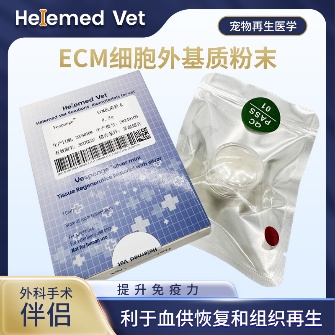
ECM Antibacterial Powder
ECM bioscaffold powder — an extracellular matrix (ECM) based antibacterial and inhibitory powder: widely used as ECM trauma dressings on infected internal/external wounds, fresh wounds, burns and crush injuries to markedly improve blood supply, accelerate healing, inhibit infection and reduce complications; it is also an ECM hemostatic material that stops capillary bleeding. How to use: after debridement, take a small amount of powder with forceps and apply to the wound surface, moisten with saline (moist wound healing) and bandage; apply once every 5 days — daily debridement is not required.
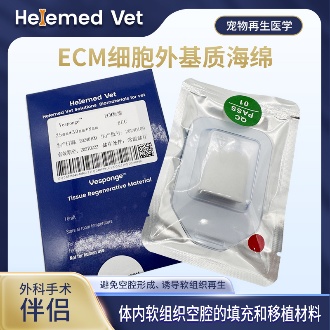
ECM Sponge
ECM filling sponge and ECM cavity-filling biomaterials: for internal soft-tissue cavity filling, providing long-lasting space occupation and inducing regeneration to achieve a soft-tissue graft effect; also an ideal ECM Tumor Filling Material for dead-space repair after tumor resection, and a routine companion to ECM trauma dressings in cavity and fistula wounds.
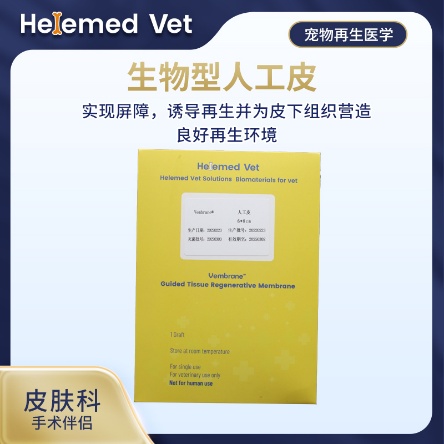
Biosynthetic Artificial Skin (6×8cm)
Artificial skin and ECM trauma dressing for external skin grafts: provides a barrier and induces regeneration, creating a good regenerative environment for subcutaneous tissue in burns and large-area skin loss.
In clinical use: the powder is applied to the debrided wound bed, moistened with saline and covered; the sponge is used to fill cavities and dead space so the defect is occupied while tissue grows into it; artificial skin is used where large areas of skin are missing, such as burns. Ask your veterinarian whether these materials suit your dog's wound — they are supplied to veterinary clinics and hospitals.
9. Dog wound healing stages, day by day
Owners ask what normal looks like. This is the textbook sequence; a clean surgical incision runs through it faster, an infected bite wound much slower.
| Stage | Typical days | What you see |
|---|---|---|
| Inflammation | Day 0–3 | Red, warm, swollen, sore. Bleeding has stopped. Some clear or blood-tinged fluid is normal. |
| Debridement | Day 1–5 | Surface looks messy; small amounts of dead tissue are cleared. Slight odour can be normal in this window; a strong or worsening smell is not. |
| Proliferation / granulation | Day 3–14 | Bright red, moist, bumpy "cobblestone" tissue fills the defect from the base up. Wound area shrinks week by week. |
| Contraction and epithelialisation | Week 2–4 | A pale, thin new skin layer grows in from the edges. The wound becomes dry and the size drops quickly. |
| Remodelling / maturation | Month 1–6+ | Scar tissue strengthens and pales. Hair usually does not regrow over a full-thickness scar. |
Two useful checkpoints: by day 7 the wound should be visibly smaller and less inflamed than day 1, and by day 14 it should be contracting steadily. If neither is true, book a recheck rather than changing dressings for another week.
10. Clinical cases: wounds that would not close
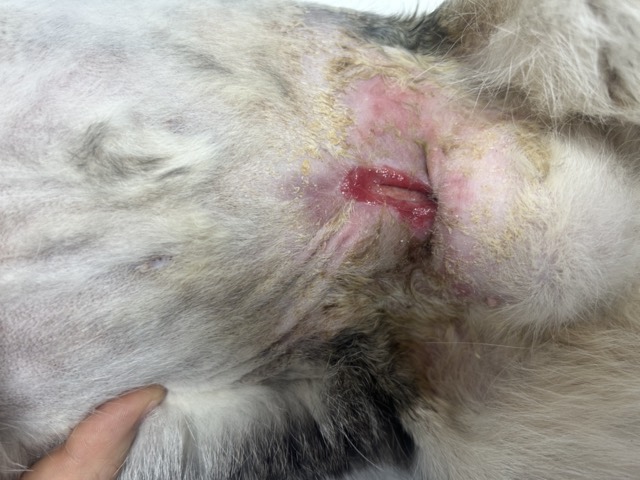
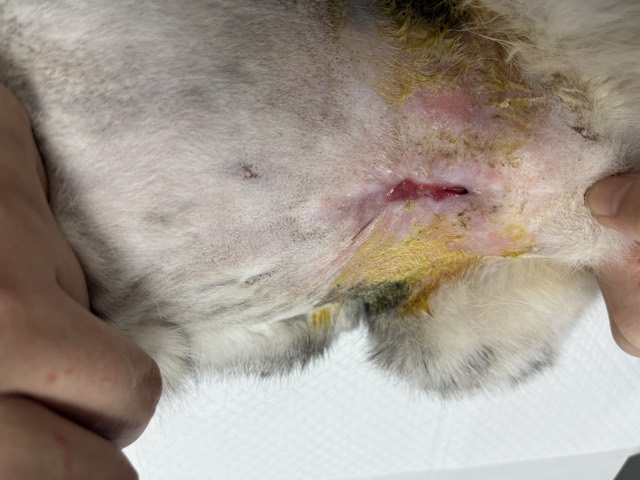
Three cases from our partner hospitals show the pattern above in practice: a contaminated bite wound, a small cavity wound that had failed to heal for over a month, and a wound that would not close after mastectomy.
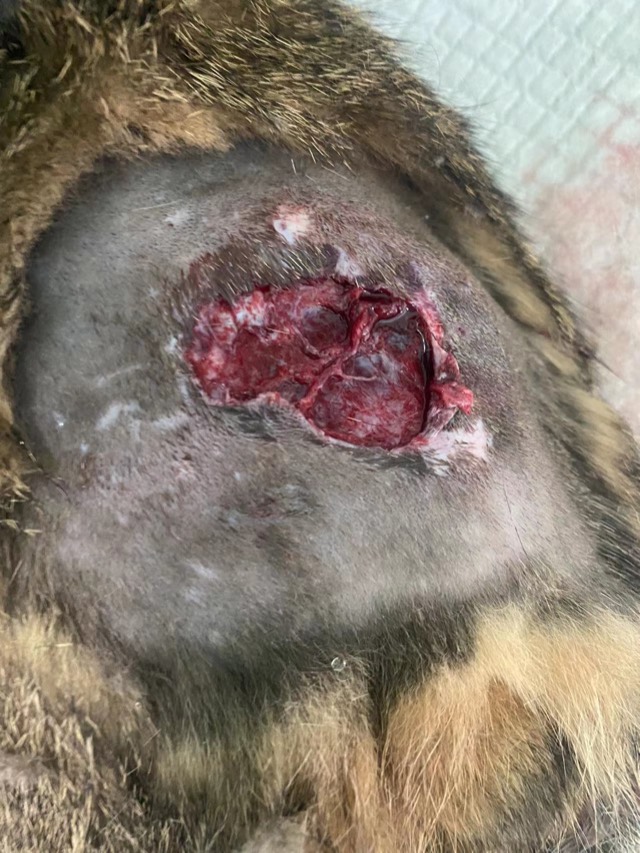
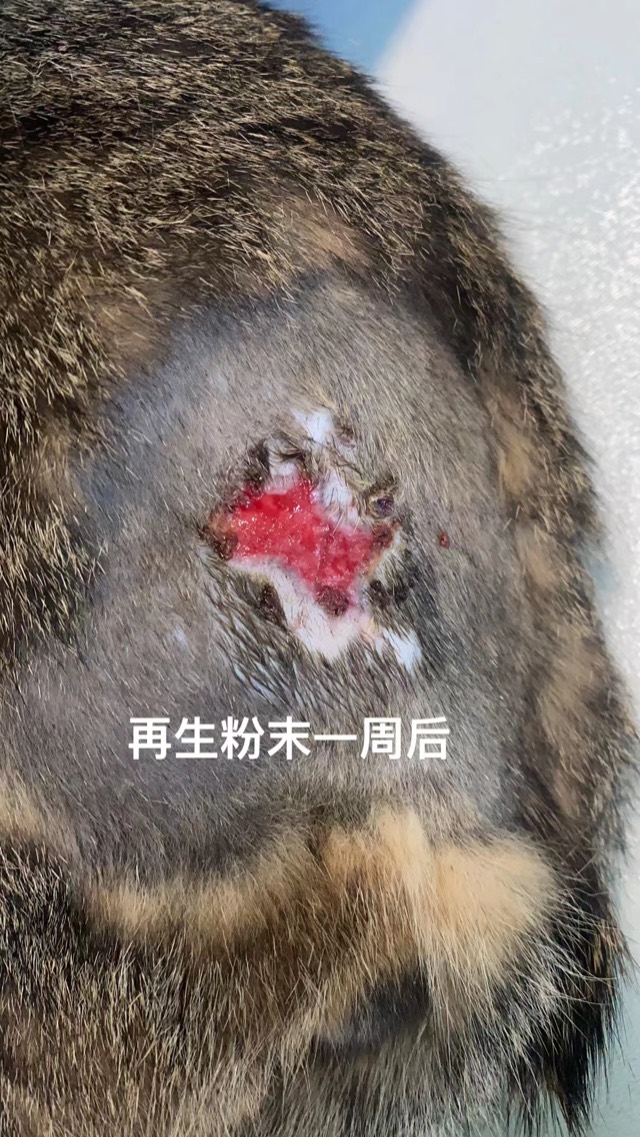
Bite-Wound Regeneration
After debridement and irrigation of the bitten, ulcerated wound, ECM Antibacterial Powder (ECM Inhibitory Powder) was placed on the wound, moistened with saline and bandaged with gauze. Re-check one week later showed the wound markedly reduced, with normal soft-tissue and surrounding-skin regeneration, no infection and no premature scabbing.
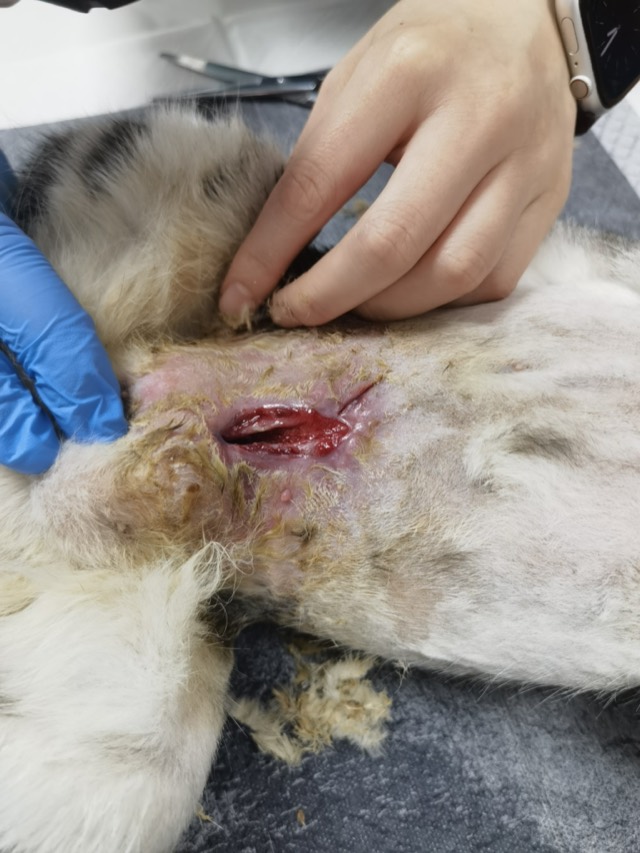
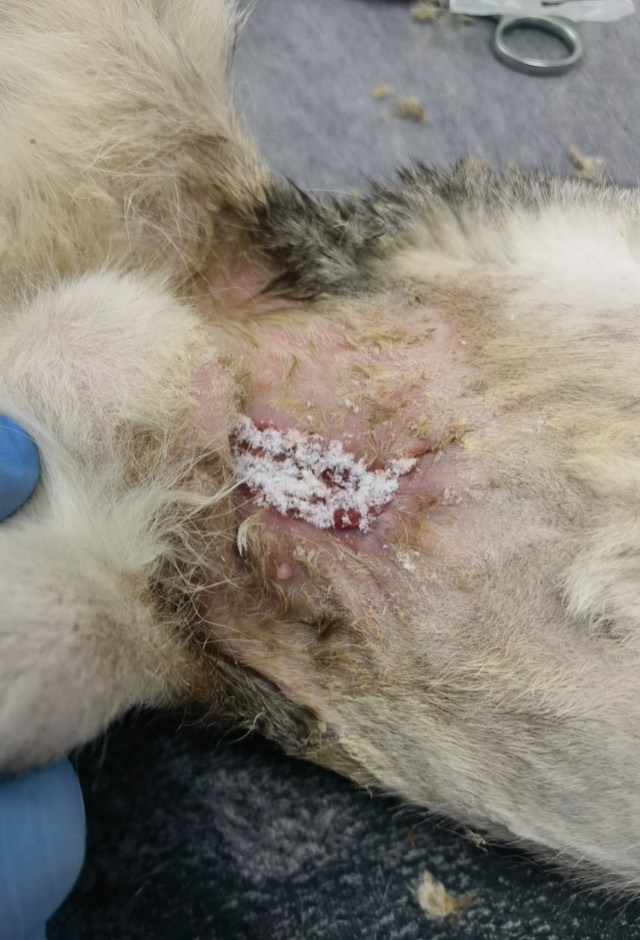
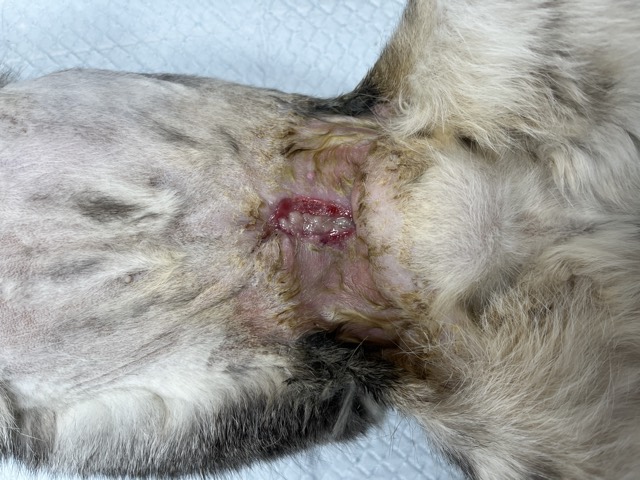
Small-Cavity Wound Healing
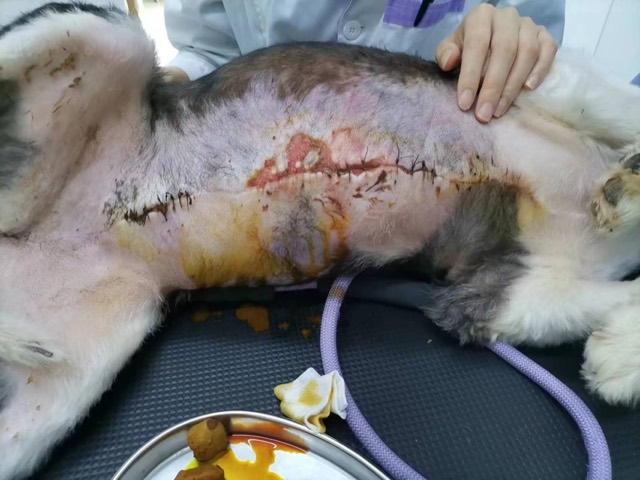
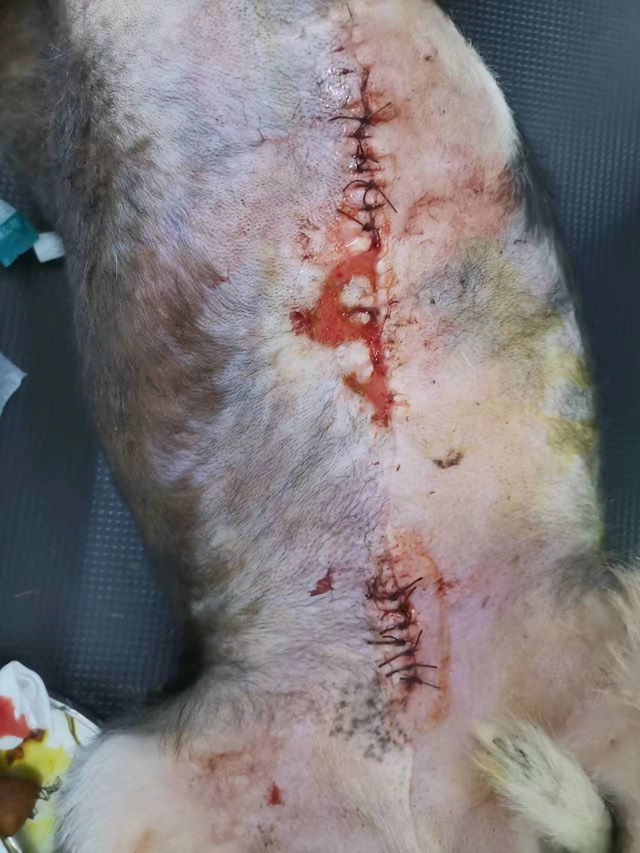
The wound failed to heal after more than a month of conventional treatment. ECM Antibacterial Powder was applied and bandaged on Jul 23; after two application cycles (10 days) the wound healed markedly with no infection or premature scabbing, and it fully recovered after one more cycle.
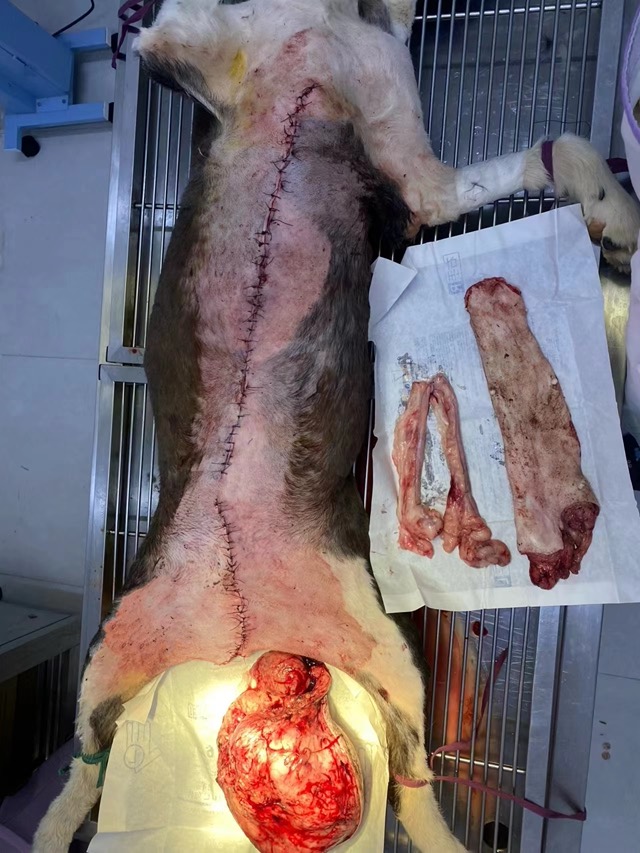
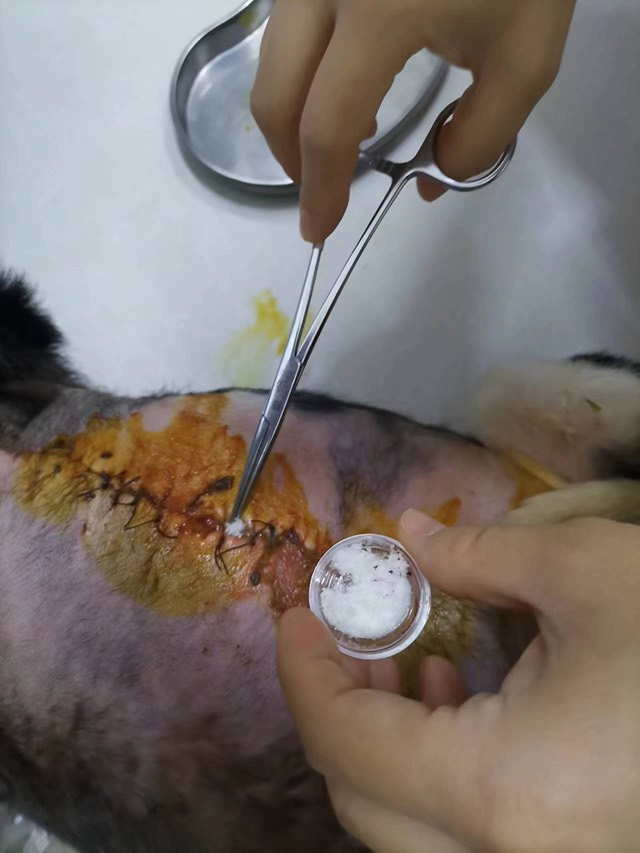
Non-Healing Wound after Mastectomy
Thirty days after mastectomy the chest wound would not heal; ECM powder was applied subcutaneously and on the surface then bandaged. After 5 days clear signs of regeneration appeared, and it basically recovered after two applications (10 days).
Cases from partner veterinary hospitals. ECM materials are veterinary surgical materials and are applied by the treating veterinarian. See all 39 clinical cases →
When to call the vet right now
Do not wait for a morning appointment if any of these apply:
- Bleeding that does not stop after 5 minutes of firm, uninterrupted pressure
- Any bite wound, especially from a cat or an unknown dog — even two small punctures
- The wound is over the chest, abdomen or a joint, or you can see muscle, tendon, bone
- The limb looks bent, unstable or is not being used
- Skin that is black, grey, cold or peeling, or a burn of any size
- An eye is involved, or the dog is squinting and the eye is cloudy
- Fever, vomiting, collapse, laboured breathing, or a dog that cannot be roused
- A wound that smells bad, is getting bigger, or has developed a soft fluctuant lump beside it (suspect an abscess)
When you call, have this ready: what happened and when, how deep the wound is, whether the dog is eating and drinking normally, and what medication the dog is already on. It changes the advice you get.
Frequently asked questions
Can I use hydrogen peroxide or alcohol on a dog wound?
No. Hydrogen peroxide, alcohol and iodine tincture are tissue-toxic: they damage the cells that would repair the wound and delay healing. Flush with sterile saline, or lukewarm tap water if you have no saline, and leave the rest to your vet.
Can I put human antibiotic cream on a dog wound?
Not without veterinary advice. Human antibiotic ointments are not dosed for dogs and some ingredients are harmful if the dog licks them off. The safest home routine is saline flushing, a clean non-stick dressing and an Elizabethan collar.
Should a dog wound be left open or covered?
Cover it. A clean, moist, non-adherent dressing keeps bacteria out, stops the wound crusting over and reduces licking. Fresh surgical and clean wounds are usually covered; infected, discharging wounds are managed with frequent dressing changes by the vet.
How long does a dog wound take to heal?
A clean surgical incision is sealed in 7 to 10 days. A small open wound managed by second-intention healing takes 2 to 4 weeks to close and up to several weeks more to strengthen. Large contaminated wounds, cavity wounds and wounds over joints take longer, and 4 to 8 weeks is not unusual.
What are the first signs of infection in a dog wound?
Worsening redness, swelling, heat and pain after day three, pus or smelly discharge, wound edges pulling apart, dark necrotic tissue, fever, lethargy and loss of appetite. Any of these means a recheck, not a dressing change.
My dog keeps licking the wound. Is that a problem?
Yes. Licking carries oral bacteria into the wound, keeps it wet and macerated, and physically damages new tissue. It is one of the most common reasons a dog wound is not healing. An Elizabethan collar is the fix, and it must be worn continuously until the vet says otherwise.
Do I need a bandage, and how often should I change it?
A bandage is needed on limbs and where the dog will not leave the wound alone. Choose a non-adherent or foam dressing according to how much the wound is oozing, keep it dry, check the toes for swelling, and change it at the interval your vet sets — usually every one to three days, sooner if it gets wet, smells or slips.
When should a dog wound be stitched?
Fresh, clean wounds are best closed within 6 to 8 hours. After that, or for bite wounds and contaminated wounds, most vets prefer to debride, dress the wound for a few days and close it later, or let it heal by second intention. Stitching a contaminated wound shut traps bacteria and leads to an abscess.